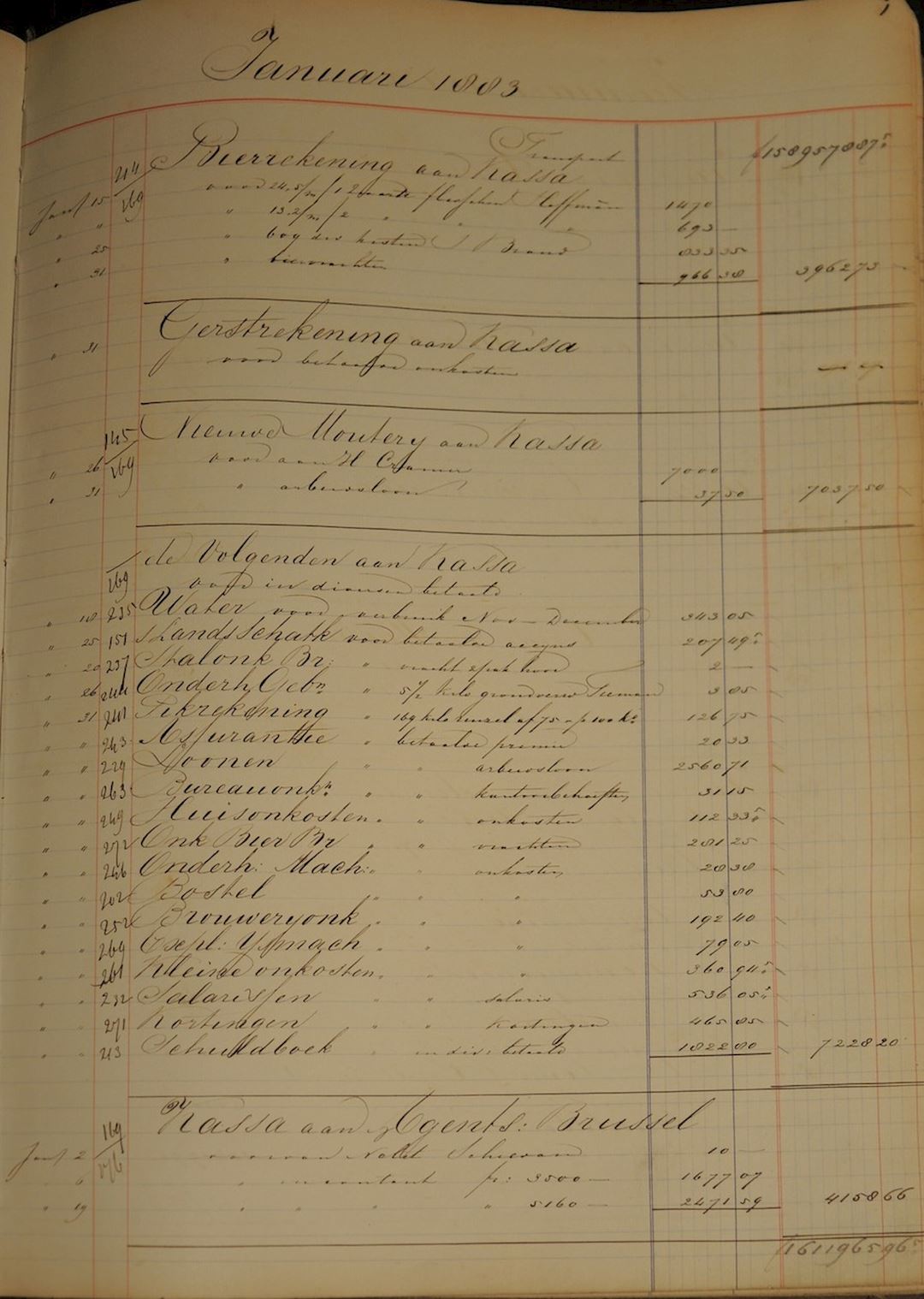
Cash book
Transcript
This accounts book, dating from the end of the 19th century, was used by the first employees of Heineken Rotterdam to tot up the receipts and expenditure. It lists thousands of kilos of grain, hop and coal, arriving by ship on the Left Rotte quay.
Brew master Wilhelm Feltmann purchased an expensive new ice-making machine, which allowed him to keep the yeast mix between 5 and 10 degrees Celsius. The machine worked so well that beer production increased and Heineken started selling the ice around the city. The cold bars of ice were warmly welcomed by pubs and households, who in the summer were otherwise dependent on ice from Norway. In the mild winter of 1883-1884, the machine even ensured that Heineken obtained a deciding competitive advantage. Their competitors were still cooling beer with imported ice, which was more expensive. And so, while several brewers went under, Heineken emerged as winner.
And there were more spin-offs, the accounts book records that malt seeds and residue from the brewery were sold as animal feed. And yeast was sold for home brewing or baking.